History & Region
Welcome to Lebo
Lebo is located in eastern Kansas, surrounded by rolling prairie, farmland, and wooded river valleys. While the landscape may appear simple at first glance, its beauty becomes clear when you take the time to look around.
The Land
Lebo lies within the Osage Cuestas, a region of east-facing ridges with steep slopes on one side and gently rolling land on the other.
To the west, the landscape transitions into the Flint Hills, one of the largest remaining tallgrass prairie regions in North America, known for its native grasses and spring-fed streams.
The Beginning of Lebo
Lebo developed in the early 1880s as railroad expansion moved through Coffey County.
On April 17, 1883, David L. Jones purchased land near a planned railroad depot and began laying out the town with William M. Barr. As the railroad arrived, businesses and homes quickly followed.
- February 11, 1884: First train arrived
- October 16, 1886: Lebo became an incorporated city
Agriculture, livestock, coal mining, and the railroad all contributed to the town’s early growth.
Where Did the Name Come From?
The exact origin of the name “Lebo” is unknown.
The town was originally referred to as “Davetown” or “Jonestown.” A commonly accepted explanation is that the name comes from Josiah Leabo, who lived near Leabo Creek.
Lebo Through the Years
The railroad played a key role in Lebo’s development, including the construction of a train depot that served the community for many years.
(Images below: historic Lebo and train depot)
-
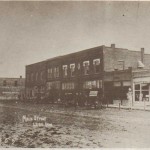
- Main Street, Lebo
-
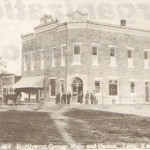
- Main Street, Lebo
-
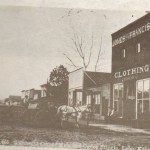
- Main Street, Lebo
-
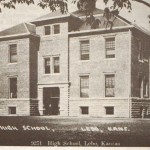
- Lebo High School
-
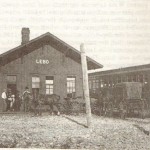
- Lebo Train Depot
-
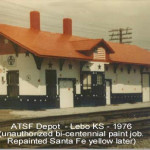
- Train Depot, 1976
Lebo Newspapers
The Lebo Light was the first newspaper published in Lebo. The Lebo Enterprise was printed from the 1800’s to the 1970’s.
(Image below: The Lebo Light and The Lebo Enterprise)
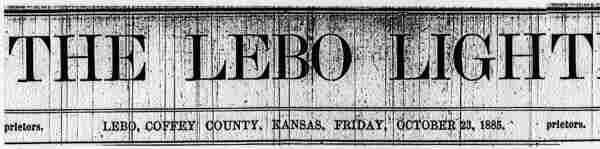

Other newspapers throughout the years include:
- Lebo Courier
- Lebo Star
- Lebo Leader
- Lebo Ledger
Lebo Today
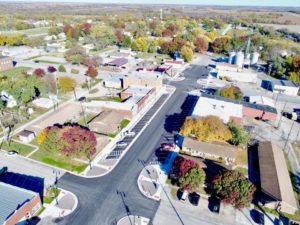
While Lebo has changed over the years, it remains a strong and close-knit community. Some historic homes and buildings from the early days of the town can still be seen today.
(Image below: current downtown Lebo)